


Mallorca is a Spanish Island in the Mediterranean Sea. It’s the largest of the Balearic islands and is loved for its sheltered coves, beach resorts, limestone mountains and simple rustic charm.
There are more than 20 golf courses on Mallorca, and most are within an hour’s drive of any point on the island – serviced by a modern road network – making it one of Europe’s most accessible and enjoyable golf destinations.
This Mallorca golf guide provides useful insights into the climate, courses, culture and cuisine as well as where to play, stay and explore.

How to get there
Fly into Mallorca’s Palma De Mallorca International Airport, which is 8km from the capital city Palma and a short drive from popular tourist resorts and nightlife destinations like Magaluf and Palma Nova. The capital, Palma, is a beautiful and historic city with a breathtaking Gothic Roman Catholic Cathedral. The locals call it La Seu, and the 121 m-long church is built on the site of a pre-existing Arab Mosque. It’s a must-visit and a great way to spend time off-course.

Where to stay
Carrossa is a five-star luxury hotel in the northeast of Mallorca, nestled in the tranquil and rolling hills of Levant near the historic town of Artà. There are 76 rooms and suites, many finished with high-quality natural stone. Wake up to great coffee with an in-room Nespresso machine and enjoy views of the bays of Alcúdia and Cala Millor as you stroll around the country estate. There’s a wellness centre, luxury spa, gym and two pools. The outdoor infinity pool is heated and served by a relaxing terrace and lounge area.
There is no shortage of high-quality accommodation in Mallorca but if you don’t want to drive, you can stay on-site at Pula Golf, the Castillo Hotel Son Vida and Sheraton Mallorca Arabella Golf Hotel, near to Son Vida, Son Muntaner and Son Quint courses.
Where to play
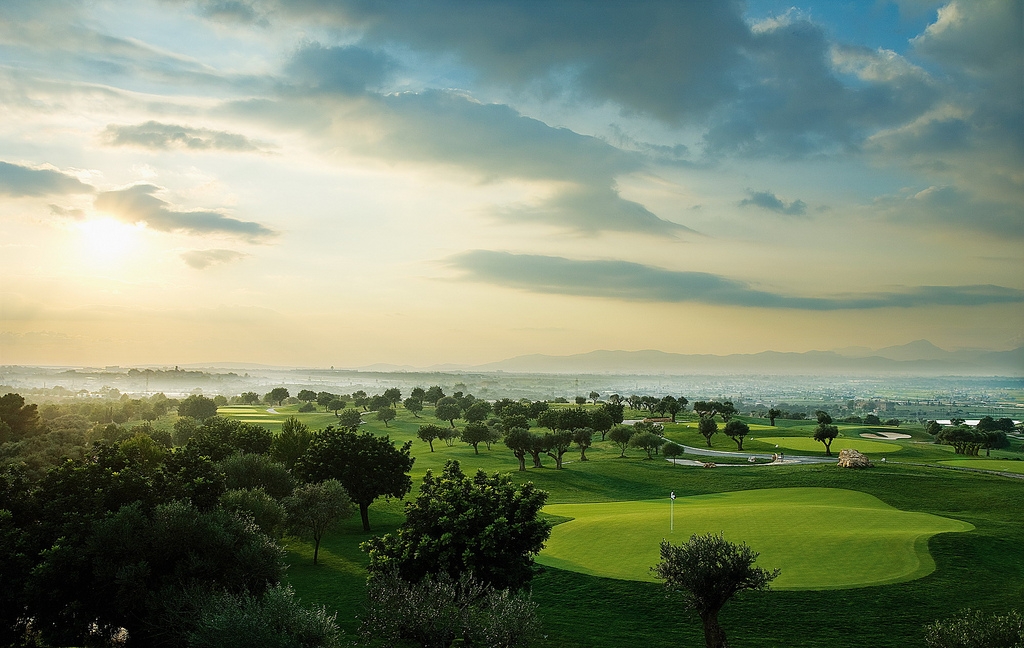
Most of Mallorca’s golf courses are concentrated in the southwest, overlooking the Bay of Palma and near the Port of Andratx and Santa Ponsa. Other courses are further inland from Palma close to the Airport, including Golf Son Gual – Mallorca’s #1 golf course.
This golf course is rumoured to have cost German businessman Adam Pamer more than EURO 30m to build and has fast become the most desired green fee on the island.
The north of Mallorca and the island’s central hinterland are far quieter than the heavily developed southern coastline with its resorts, marinas, nightlife and year-round tourism.
The terrain becomes more mountainous the further north and west you travel into the Sierra de Tramuntana mountain range and flattens again when you reach the Northern Coast, with its beautiful rural charm, fincas (Spanish country cottages and villas), windmills and old towns like Pollença.
The similarly sounding Puerto Pollensa – a seaside tourism resort with the renowned ‘pine walk’ – is also well worth a visit, as is the secluded and beautiful beach on the Formentor Peninsula. There are a smaller number of golf courses, but some of the most interesting and attractive lie in the North, such as Alcanada Club de Golf in Alcudia, developed and operated by the Porsche family of Germany.
When is the best time of year to play golf in Mallorca?
Mallorca’s peak golf season spans March to June, when overseeding from November and December pays off, and the prominent Bermuda grasses are lushest, fairways are greenest, and the greens run fast and true. Autumn (October to November) brings pleasantly warm temperatures and is also a good time to play immediately before the essential maintenance schedule begins in late November and throughout December.
The high Summer season sees less traffic on the courses as it can be too hot at the peak of the day and the island’s many sun-kissed beaches prove more attractive to holidaymakers. This is also the worst time of year for heat stress on the fairways, greens and surrounds, and when demands on water usage for irrigation are at their highest.
If you visit in the Autumn months, be prepared for courses that may still be recovering from the hot summer heat stress and may not be as lush, green, or manicured as you’d hope.
MALLORCA FACT-FILE
Currency
EURO
Mallorca Weather
Mallorca enjoys over 300 days of sunshine per year, making it a favourite destination for British and Northern European golf holidaymakers. Warm and sunny year-round, with an average temperature of 21 degrees, rising above 30 degrees in summer months. Autumn is cool and breezy and a good time to play golf.
Off-Course Highlights
Palma Cathedral, Portals Nous Marina – home of the wealthy, stylish jet-set, eating in one of the many off-the-beaten-path Tapas restaurants in Palma.
Cap de Formentor is a 20km long peninsula at the northern tip of the island which Majorcans call the ‘meeting point of the winds.’ If you have a hire car, then it is a pleasant and dramatic way to spend an afternoon or early evening, driving out to visit the white lighthouse at the end of the cape. Along the way, stop at the viewpoints and seek out small coves and beaches, especially Platja Formentor (Formentor Beach) below the iconic hotel which opened in 1930. This is surrounded by sweet-smelling pines and enjoys beautiful views over the bay.
Mallorcan Speciality Foods
Sobrassada: A soft cured pork sausage seasoned with smoky paprika and spreadable. Brilliant paired with cheese, olives and wine.
Ensaimadas – a typical Mallorcan pastry breakfast and the island’s equivalent of a croissant. Sweet, airy dough shaped into a spiral and dusted with powdered sugar
Arròs Brut: A warming, flavorful soupy stew cooked with meats, seasonal vegetables and spices.
Famous Mallorcans
Tennis Players Rafa Nadal and Carlos Moya and two-time Spanish Prime Minister Antonio Maura
Famous Mallorcan Residents
Michael Douglas, Boris Becker and Claudia Schiffer – all own villas on the Island.